A guy just climbed a 1,677ft tower with a bag of chalk
Date
Author
Ryan Mallin
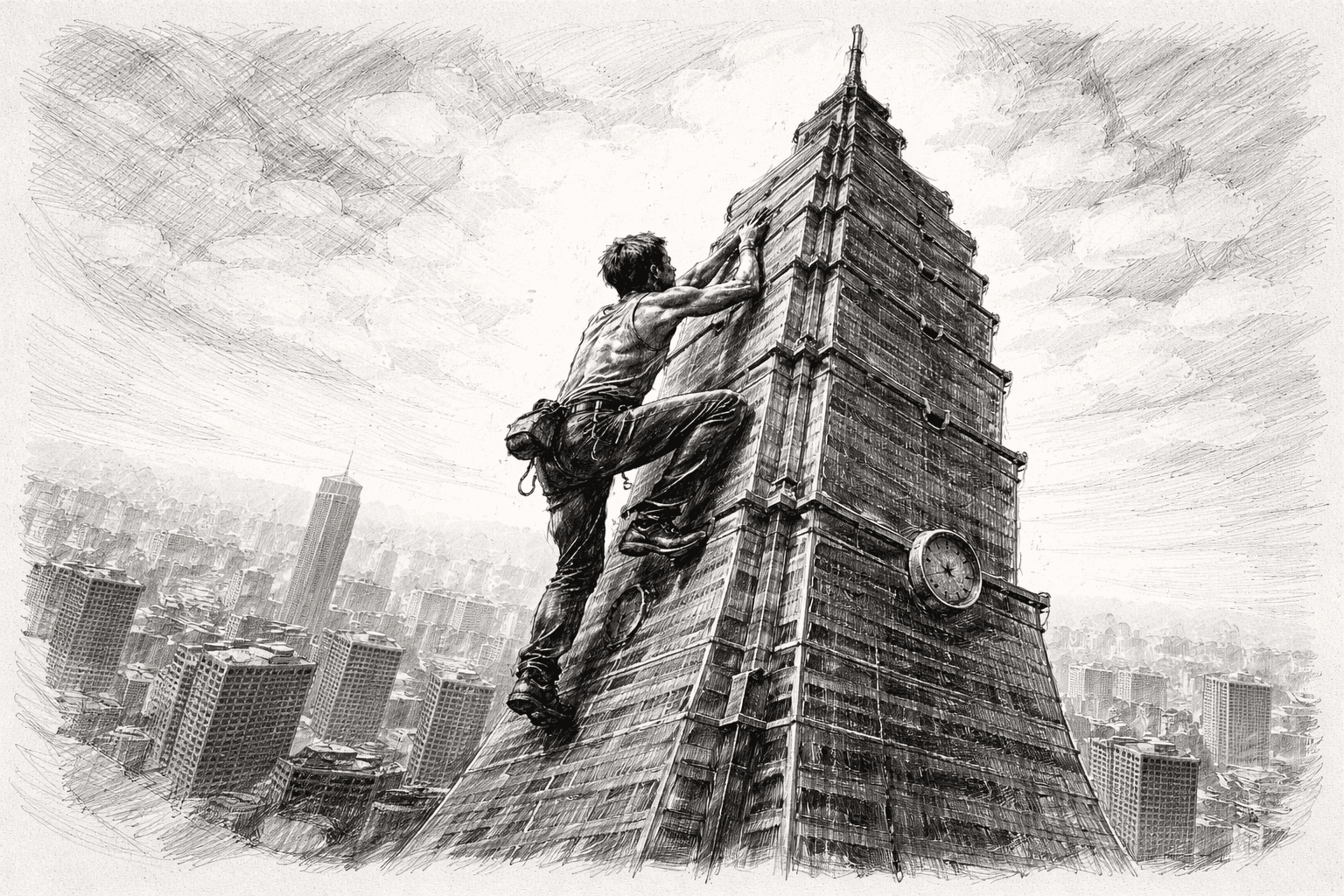
Alex Honnold just scaled all 101 stories of Taipei 101 in 1 hour and 35 minutes - with nothing but a bag of chalk FFS. But to be fair he did earn about $500k.
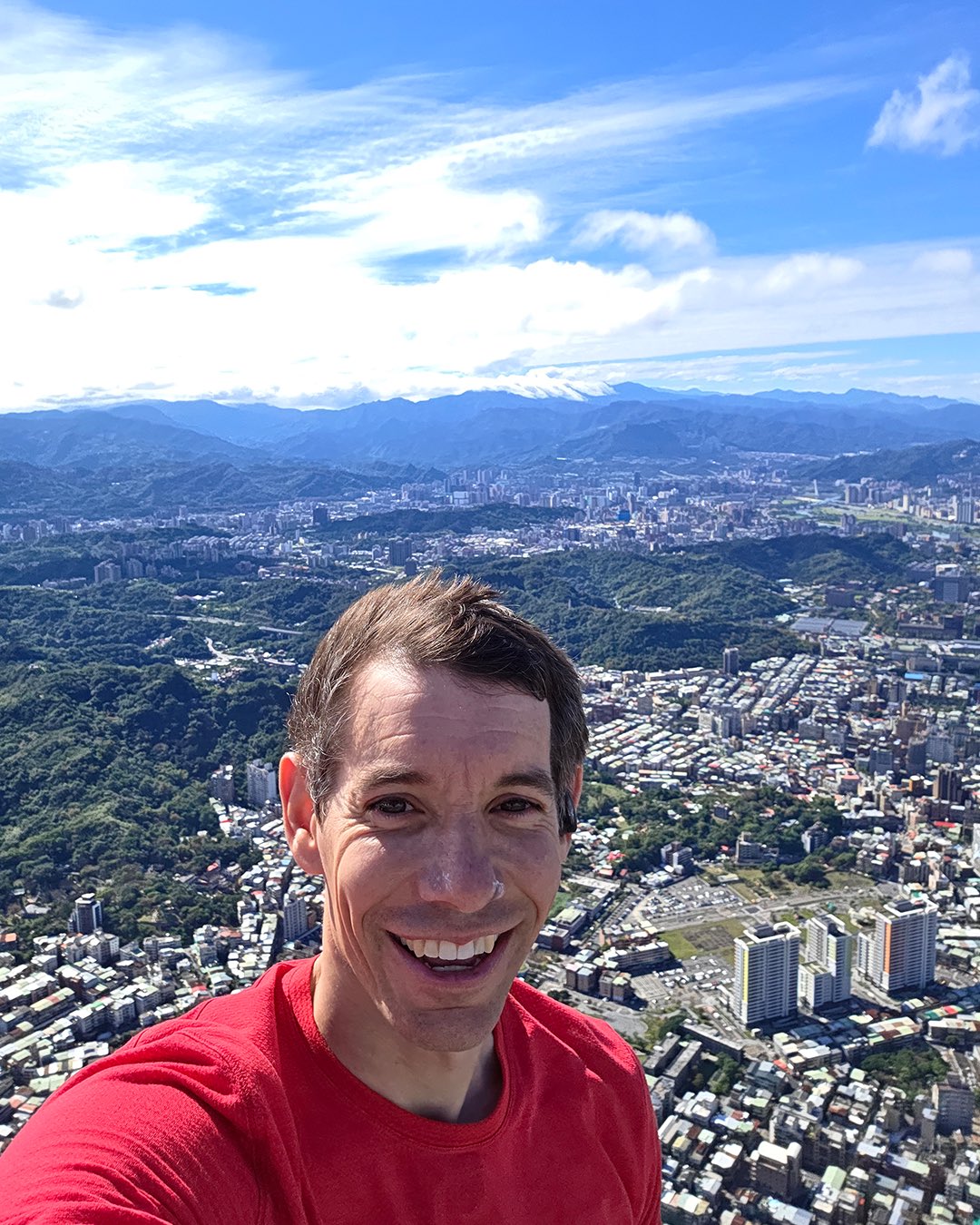
The 40-year-old climber was literally waving to the crowds below and he also shared a mid-climb FaceTime call with his wife through the glass on the 60th floor. As he neared the top he gripped the structure with his legs and took both hands away from the structure to chalk them up one last time before taking this selfie from the top:
Unreal.
Netflix live-streamed the climb, which went viral immediately. Probably for the main reason that it was a solo free climb i.e no safety equipment other than a decent pair of shoes and a bag of chalk hanging from his waist.
I have read the comments "one slip and he was dead", "reckless stunt". Remember that Netflix streamed this live - imagine. There was no way that this was purely left to chance, this was calculated risk vs reward. Do you think this would even make the news if he had used a harness like the window cleaners probably do? He would have had to pay them to do it.
How would you even start to calculate and manage this risk? I have no idea which techniques they used but it probably involved a shit tonne of data.
Here's my take:
HAZID
Objective: Identify all credible hazards associated with scaling the building.
Hazard Category | Hazard | Consequence |
|---|---|---|
Environment | Wind gusts at elevation | Loss of grip, fatality |
Human factors | Fatigue, sweat, fear | Loss of grip, fatality |
External | Birds, drones, loose façade panels | Loss of grip, fatality |
Interface | Glass, metal, architectural design features | Loss of grip, fatality |
Media | Live broadcast pressure | Poor decision-making, fatality |
HAZID conclusion: Basically, don't lose grip or you'll die.
HAZOP
Node: Climber at elevation
Design intent: Remain attached to building at all times!
Deviation | Guide Word | Cause | Consequence | Safeguards |
|---|---|---|---|---|
No grip | NONE | Sweat, smooth surface | Fall | Chalk |
Less grip | LESS | Fatigue | Fall | Experience |
More wind | MORE | Weather | Fall | Vibes |
Reverse movement | REVERSE | Slip | Fall | Upper body strength |
Late pause | LATE | Overconfidence | Fall | Self-awareness |
HAZOP Conclusion: The system relies heavily on Operator Skill…
LOPA
I'm guessing Netflix had access to a bunch of math/engineering geeks who carried out some number crunching (consequence analysis).
Scenario: Alex climbs up the building and his grip fails causing him to fall to his death.
Initiating Event: Loss of a critical point of contact.
Initiating Event Frequency: Alex has claimed to have climbed more than 2,000 times without a rope - he is still here to tell the tale. This doesn’t mean the risk is zero, only that it’s very low <1 in 2,000. Alex Honnold’s experience and the fact that no failures had been observed over 2000 climbs would have determined Netflix appetite for the risk. On a side note, even though this climb was nuts, some of his other climbs were next level.
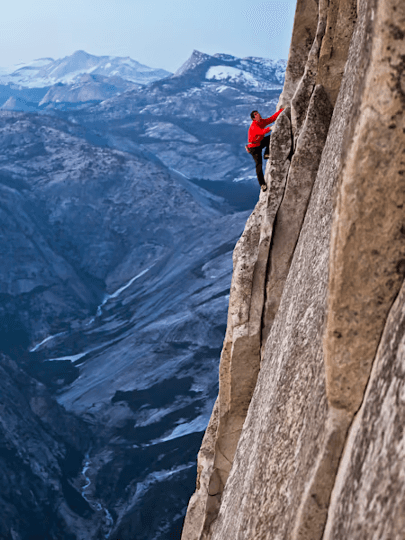
Consequence: Fatality.
Independent Protection Layers: None - there are zero independent protection layers between loss of grip and fatality. The only controls he has in place are a decent pair of shoes and a bag of chalk
OK.
What is the chance that Alex dies and how much do the basic controls reduce that chance?
Start with the one thing that matters. If he slips, he falls, he likely dies.
So how likely is a serious slip? Alex has done ~2000 climbs and I have to assume he wore proper climbing shoes and chalk. It isn't zero I can tell you that much. Applying the Rule of Three, if you observe 0 fatalities in N attempts, a conservative “upper bound” for the true risk is about 3/N. So with N = 2000:
Upper bound risk = 3 / 2000 = 0.0015
That’s 0.15%
Which is about 1 in 667
Based on ~2000 comparable climbs with no fatality, the fatality risk is likely below 1 in 667 per climb.
FYI the Rule of Three is a statistical method used to establish a conservative 95% confidence upper bound for the true risk - you typically apply a method like this when zero occurrences have been observed in a sample of size.
For comparison, let's say he didn't use chalk and decent footwear. Considering the chalk and the footwear directly address the main failure mode i.e. dries sweat, improve friction etc., I will apply a conservative 80% effectiveness.
Based on ~2000 climbs with a conservative number of about 1 in 667 per climb with controls, you're probably looking at a 1 in 130 without them. In other words chalk and proper footwear probably reduces the risk of slipping and falling by 5x.
If you were Netflix, would you have gambled on a 0.015% chance?