When a Formula 1 Car Becomes a Vibration Hazard
Date
Author
Ryan Mallin
When a Formula 1 Car Becomes a Vibration Hazard
Formula 1 cars are designed to push the limits of engineering.
But this weekend’s Australian Grand Prix has highlighted something unexpected:
A vibration problem that has turned into a genuine occupational health risk for the drivers.
Aston Martin’s new Honda-powered AMR26 is suffering from severe vibration coming from the power unit. What started as a reliability issue during pre-season testing has now escalated into something much more serious.
The concern is no longer just about finishing the race; it’s about protecting the drivers from Hand-Arm Vibration Syndrome (HAVS).
The Issue No One Expected
During winter testing, Aston Martin recorded the lowest mileage of any Formula 1 team.
At first, the symptoms looked like a typical engineering reliability problem:
• Batteries failing
• Components shaking loose
• The engine unable to run at full power
But as testing continued, something else became clear.
The vibration from the engine was travelling through the car and directly into the steering wheel and pedals, meaning the drivers were feeling it constantly while driving.
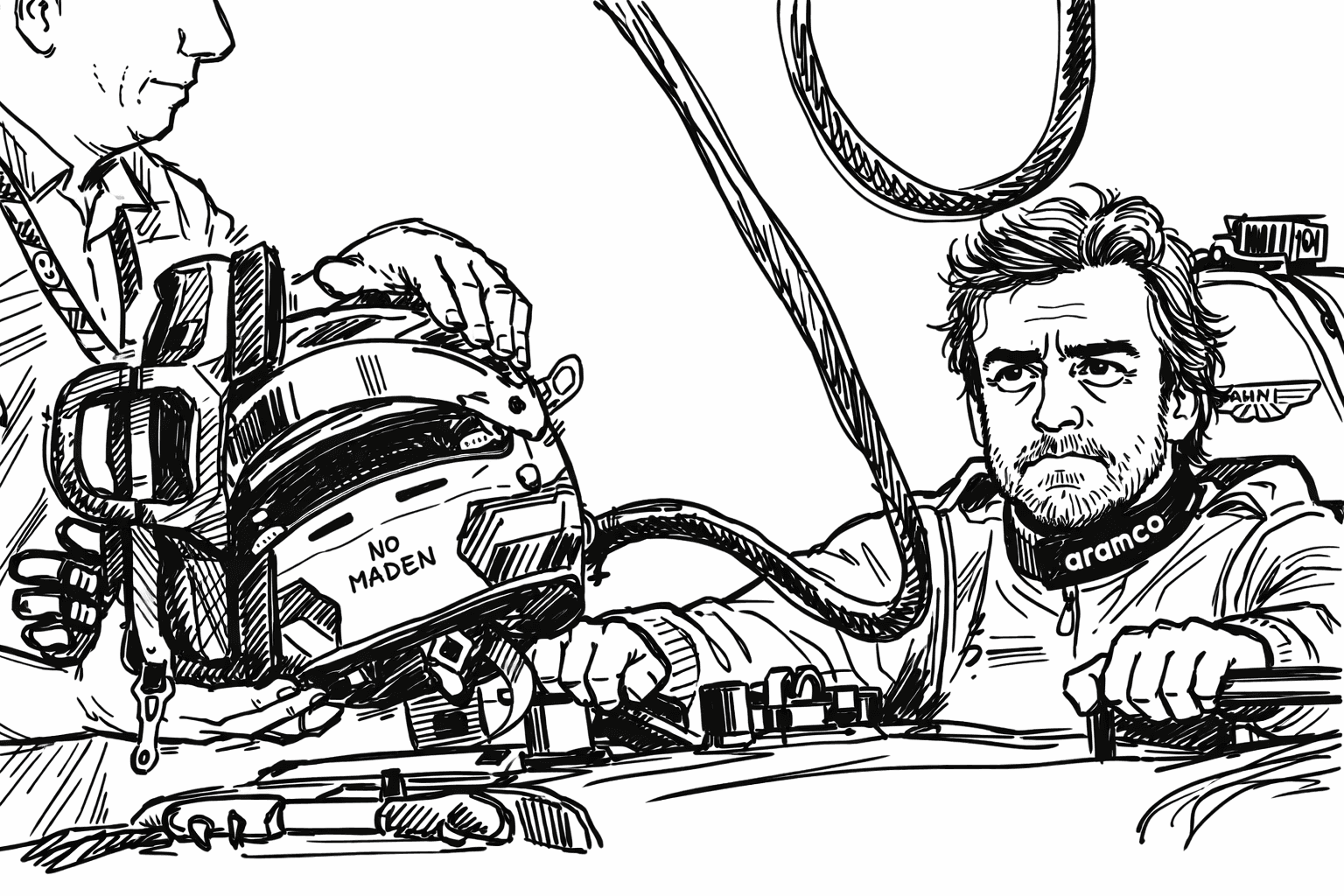
Fernando Alonso described numbness in his fingers and feet after longer runs in the car.
That’s not something you want when you’re driving a Formula 1 car.
The Real Concern
The big worry isn’t just comfort, it’s long-term HAVS-related damage caused by vibration.
Many industries deal with this risk. Workers who regularly use tools like breakers, grinders, or drills can develop conditions affecting the nerves and blood vessels in their hands.
Over time this can lead to:
• Loss of sensation in the fingers
• Reduced grip strength
• Circulatory problems
• Permanent nerve damage
The drivers have already started setting their own limits.
Fernando Alonso believes around 25 consecutive laps is the maximum he can safely drive, and Lance Stroll’s threshold is even lower at around 15 laps.
Bear in mind that the Australian Grand Prix is 58 laps, so finishing the race may not even be possible.
What the Safety Guidance Says
In the UK, vibration exposure is regulated under the Control of Vibration at Work Regulations 2005, with guidance published by the HSE.
Two key exposure thresholds are used:
Exposure Action Value (EAV)
2.5 m/s² A(8)
This is the point where employers must take action to reduce vibration exposure.
Exposure Limit Value (ELV)
5 m/s² A(8)
This is the maximum daily exposure allowed. Workers must not be exposed above this level.
Exposure is calculated over a working day, taking into account both vibration magnitude and duration.
In many workplaces this is managed by:
• Limiting how long vibrating tools are used
• Introducing alternative equipment
• Rotating workers between tasks
• Engineering controls to reduce vibration at source
Interestingly, Aston Martin is now doing something very similar by limiting how long the drivers are exposed until the engineering issue is fixed.
Why It’s Happening
Adrian Newey, Aston Martin’s team principal, has been quite open about the issue.
The vibration originates in the Honda power unit.
The problem is that modern F1 cars are built with extremely stiff carbon-fibre structures, which are designed that way for performance.
However, the stiffness also means there is almost no natural damping.
So instead of absorbing the vibration, the car transmits it straight to the driver.
Engine → chassis → steering wheel → driver.
What the Team Is Doing
For now, Aston Martin is essentially operating in damage-limitation mode.
Engineers have already tested several fixes, and early updates have reduced vibration affecting the battery system. However, vibration still reaches the driver and the issue hasn’t been fully solved yet.
The team is focusing on:
• Limiting how long drivers stay in the car
• Running shorter stints
• Collecting as much data as possible to find the root cause
They’re prioritising driver safety over race performance, which is why early retirements this weekend is possible.
A Reminder That Safety Still Applies at the Top Level
It’s easy to think of Formula 1 as a world of cutting-edge technology and unlimited budgets.
But at its core, this situation is a familiar one:
• A machine produces vibration
• The structure transmits it
• The operator is exposed
And when that exposure continues long enough, the human body starts to suffer the consequences, just as it would with any vibrating tool.
Whether that machine is a jackhammer on a construction site or a Formula 1 car on the grid, the principle is exactly the same.
One Thing That Stands Out
Instead of pushing through and hoping for the best, the team has acknowledged the risk and set clear limits to protect the drivers even if that means sacrificing results in the short term.
Sometimes the right decision in safety isn’t the easiest one.